So, you’re thinking about heading to Tanzania? Great choice, honestly. We’re talking Serengeti sunsets, Kilimanjaro mornings, and Zanzibar beaches that look fake; they’re so pretty. But before you start daydreaming too hard, let’s talk about the practical stuff — because nobody wants to get turned away at the airport over a missing document.
Don’t worry, I’ll keep this simple. Think of it as a chat with a friend who’s done the homework for you.
First Things First — Your Passport
Make sure your passport is valid for at least six months after your arrival date and has at least one blank page for a stamp. Sounds basic, but you’d be surprised how many people get caught out by this. Also, save a digital copy on your phone — just in case.
Do You Need a Visa?
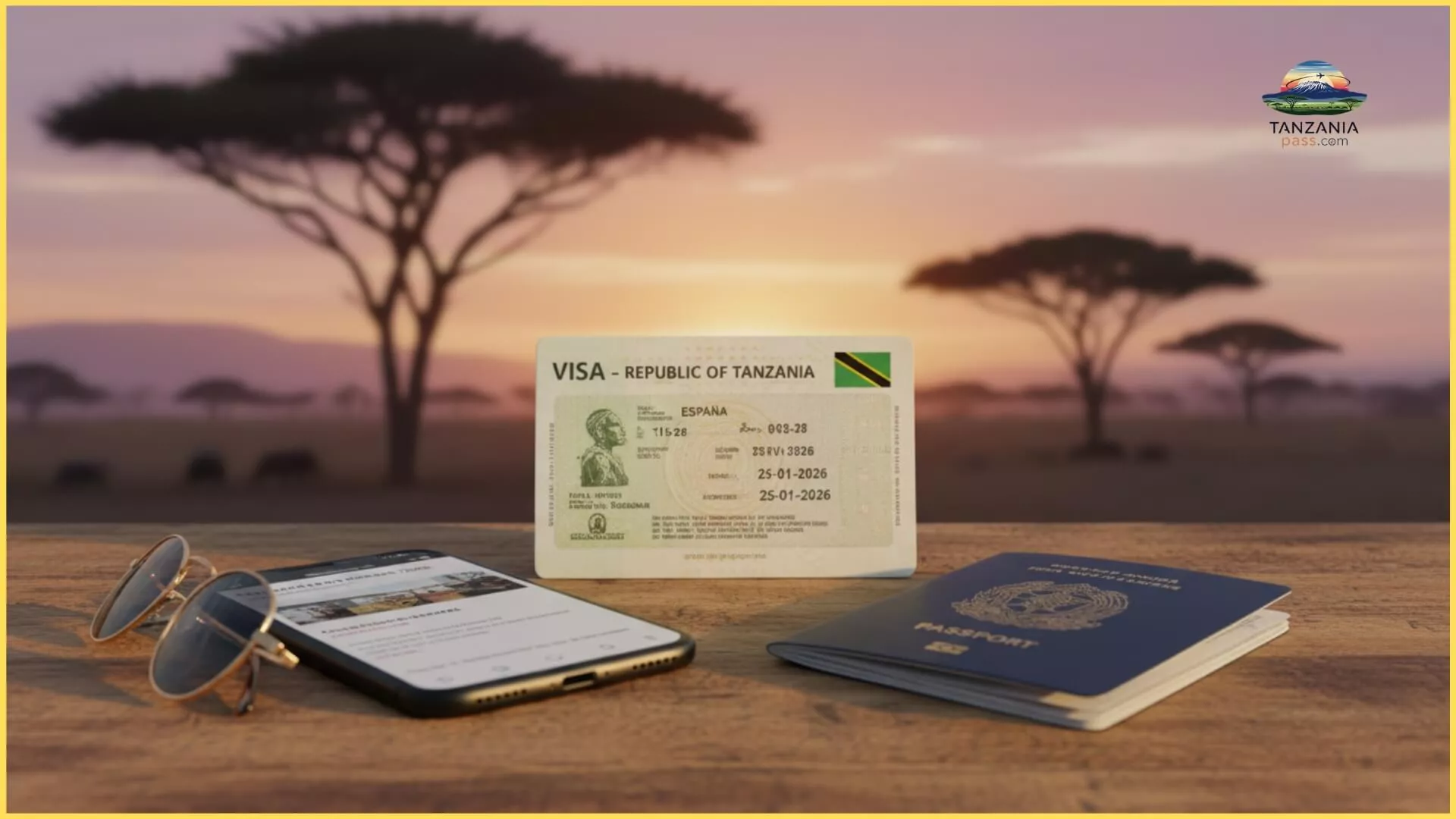
Most likely, yes. The good news is it’s pretty straightforward. You’ve got two options:
eVisa (the smart choice): Apply online through Tanzania’s official immigration portal. You’ll get a “Grant Notice” by email — print it or save it on your phone. Apply at least 2–4 weeks before you travel.
Visa on Arrival: Available for some nationalities, but honestly, the eVisa is less stressful.
Here’s a quick breakdown of what it’ll cost you:
| Visa Type | Duration | Cost |
|---|---|---|
| Tourist Single Entry | 90 days | $50 |
| Tourist Multiple Entry | 90 days | $100–$150 |
| Transit Visa | 3 days | $30 |
Quick heads-up for Americans — you’re required to get the multiple-entry visa for $100. No workarounds there.
Oh, and bring proof of your return ticket and hotel bookings. Immigration officers love seeing that you have a plan.
Shots and Health Stuff
Here’s the big one: yellow fever vaccination is mandatory if you’re coming from a country where it’s endemic — or if you had a layover of 12+ hours in one. Carry that little yellow card (the “carte jaune”) with your travel documents. Don’t leave it at home thinking you’ll be fine — you won’t.
Other vaccines aren’t required but are a really good idea:
Hepatitis A & B
Typhoid
Malaria medication (seriously, take this one)
Rabies, if you’re heading off the beaten path
As for COVID-19, no testing or vaccine proof is needed in 2026. Still, worth checking closer to your travel date just in case things change.
The Plastic Bag Rule (Yes, Really)
This one surprises a lot of people. Tanzania has banned single-use plastic bags completely. That includes the bags you packed your stuff in at home. Customs officers at the airport will actually check your luggage, and they will confiscate plastic bags without hesitation.
The fix is easy: swap your plastic bags for packing cubes, canvas totes, or reusable fabric bags before you fly. Ziplock bags for your toiletries are fine, just don’t overdo it.
Wait — You Can’t Use Dollars in Tanzania Anymore
Yep, you read that right. This is one of those things that a lot of travelers are still finding out the hard way, so let’s save you the awkward moment at the hotel checkout.
Since March 2025, Tanzania has officially ditched the USD for everyday transactions. New foreign exchange rules mean everything — hotels, restaurants, safari bookings, you name it — has to be priced and paid in Tanzanian Shillings (TZS). No exceptions. That whole “oh, do you take dollars?” thing just doesn’t fly anymore.
So what do you do? Simple — swap your money when you land. You’ve got options: banks, exchange bureaus, or even your hotel (though hotels usually give you the worst rate, heads up). Get yourself a decent stack of shillings, and you’re good to go.
Now, if you’re sticking to the bigger spots — like Dar es Salaam, Arusha, or Zanzibar Town — your card will likely work just fine at hotels and restaurants. But the second you wander off the beaten path? Cash is king. Like, seriously, king. Don’t assume that little guesthouse near the crater or that roadside lunch spot has a card machine. They probably don’t.
A Few Local Laws Worth Knowing
Tanzania is genuinely safe for tourists, but a couple of things are worth being aware of:
Dress modestly outside beach resorts, especially in Zanzibar — cover shoulders and knees in towns and mosques
Don’t photograph government buildings, military sites, or airports — always ask permission before pointing your camera at locals, too
Same-sex relationships are illegal under Tanzanian law — something to be aware of if you’re an LGBTQ+ traveler
Stay away from the border area near Mozambique’s Cabo Delgado province — the FCDO advises against travel within 20km of that border due to security risks
Driving and Getting Around
If you’re planning to rent a car, you’ll need an International Driving Permit alongside your national license. Tanzania drives on the left. Roads outside cities can be rough, and night driving is a bad idea — poorly lit roads plus wandering animals is not a fun combo.
For safaris, domestic flights are common. One thing to note: small bush planes (the ones that hop between game parks) usually have a luggage limit of around 15kg, including carry-on. Pack light for that part of the trip.
Zanzibar Has Its Own Rules
Zanzibar is semi-autonomous, which means it has a few extra entry requirements on top of everything else.
The big one: mandatory travel insurance. Since October 2024, every foreign visitor must buy the Zanzibar Government Inbound Travel Insurance (called the ZIC policy) upon arrival. It’s separate from whatever private insurance you already have, and it covers emergency medical care, evacuation, baggage loss, and personal accidents. It’s valid for up to 92 days. Skip it and you could literally be denied entry — airlines won’t remind you, but immigration will check.
Also, Zanzibar is a predominantly Muslim island. The dress code is taken seriously in Stone Town and outside resort areas — just be respectful and you’ll be totally fine.
Don’t Make These Classic Mistakes
A quick list of things that trip people up:
Forgetting to check if your transit counts as passing through a yellow fever country
Packing plastic bags (customs will find them)
Trying to pay in USD (it’s now illegal at most businesses)
Showing up in Zanzibar without the ZIC insurance
Selecting the wrong entry airport on your eVisa — it must match your actual arrival point
Overstaying your visa — if you need an extension, sort it out at an immigration office before it expires
Quick Checklist Before You Go
Passport valid 6+ months with blank pages
eVisa is applied for 2–4 weeks in advance
Yellow fever certificate (if applicable)
ZIC insurance for Zanzibar
Reusable bags packed, plastic ones left at home
TZS cash ready (or plan to exchange on arrival)
Return ticket and hotel bookings saved
Tanzania is genuinely one of those destinations that lives up to the hype — but only if you show up prepared. Get the paperwork right, ditch the plastic, sort your shillings, and you’re in for an absolute adventure. Have an amazing trip!