If you’re wondering when to go on safari in Tanzania, here’s the short answer: for most people, the best time is from June to October. That’s when the weather is dry, the bush is thinner, and animals are much easier to spot.
But that doesn’t mean other months are a bad idea. In fact, January and February are amazing if you want to catch the wildebeest calving season in the southern Serengeti. And if you care more about lower prices, fewer crowds, and lush green views, November or even March to May might actually suit you better.
So really, the “best” time depends on what kind of safari you want.
When Is the Best Time for Safari in Tanzania?
If you want that classic safari experience — dry roads, loads of wildlife, and great chances of seeing the Big Five — go between June and October. This is the most reliable time across Tanzania’s top parks.
If your dream is to see baby wildebeest being born and predators hanging around nearby, then January and February are hard to beat.
If you’re after better deals and don’t mind a bit of rain, March to May and November can be great value.
Tanzania Safari Seasons at a Glance
Tanzania’s safari year is usually split into three main seasons:
Dry season (June to October): Best for wildlife viewing, river crossings, and that classic golden safari look. Downside? Higher prices and more people.
Green season (November to March): Beautiful green scenery, good birdwatching, fewer crowds, and calving season in January and February. Downside? Wildlife can be more spread out, and rain is more likely.
Long rains (April to May): Cheapest time to go, with lush landscapes and fantastic birding. Downside? Muddy roads, heavy rain, and some camps may close.
Dry Season: June to October
This is peak safari time in Tanzania, and honestly, it’s easy to see why.
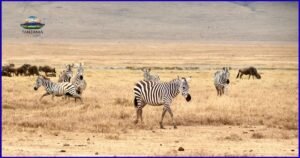
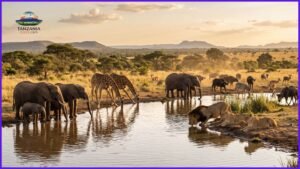
During these months, the grass is shorter, the bushes are less thick, and water becomes harder to find. That means animals gather around rivers and waterholes, which makes them easier to spot. Lions, elephants, buffalo, giraffes — everyone seems to show up like it’s the only café in town.
It’s also the time for some of the Great Migration’s biggest highlights. In June and July, you may catch the Grumeti River crossings in the western Serengeti. From July to October, the action shifts north for the famous Mara River crossings, complete with chaos, drama, and some very happy crocodiles.
The catch? Prices go up, and the best lodges fill fast, especially in July and August.
Green Season: November to March
This is when Tanzania turns lush and green again, and it’s honestly beautiful. Everything looks fresh, the landscapes are super photogenic, and there are far fewer safari vehicles around.
It’s also a fantastic time for birdwatching, since migratory birds arrive in big numbers.
The real stars of this season are January and February. That’s when the Ndutu Plains in the southern Serengeti become the stage for wildebeest calving season. Thousands of calves are born, and of course, predators know exactly what’s happening. So lions, hyenas, cheetahs, and leopards are never far away. If you like drama, this is your moment.
Long Rains: April to May
Now for the least popular safari period — but not necessarily the worst.
April and May are the wettest months in most of Tanzania’s safari areas. That means heavier rain, muddy roads, and animals spread out over a wider area. So if it’s your first safari and you want easy wildlife sightings, this probably isn’t the best time.
That said, there are real advantages. Prices can drop by 30–50%, birding is excellent, and the scenery is incredibly green and beautiful. Some photographers actually love this season. Just keep in mind that some camps, especially in the southern circuit, may close during the heaviest rains.
Tanzania Safari Month by Month
January
January is a really nice time to visit. The landscape is green, migratory birds are everywhere, and predator activity starts picking up in the southern Serengeti as calving season gets closer.
It’s a smart choice if you want good wildlife, fewer tourists, and a more relaxed safari feel.
February
If you ask me, February is one of the best months of the whole year for safari in Tanzania.
This is peak wildebeest calving season in the Ndutu area. Thousands of baby wildebeest are born, and predators are on full alert. Lions, cheetahs, leopards, hyenas — everyone shows up for the action. Wildlife viewing can be incredible.
March
Early March can still be very good. The scenery stays lush, and the herds begin moving north through the central Serengeti.
By late March, though, the long rains usually start to build, and road conditions can get worse. So this month is a bit of a mixed bag.
April
April is the toughest month for safari if your main goal is easy animal sightings.
It’s usually the wettest month, with thick vegetation, muddy tracks, and wildlife more spread out. Not ideal for first-timers. But if you want very low prices, excellent birding, and parks that feel nearly empty, it can still be worth considering.
May
May is still part of the long rains, but it can appeal to travelers who care more about value and atmosphere than perfect conditions.
The skies can be dramatic, the landscapes are super green, and prices stay low. Some lodges in the southern and western circuits may still be closed or running limited services, though.
June
June is when things start getting really good again.
The rains ease off, roads improve, and wildlife becomes easier to find. Many safari experts see June as the start of the classic safari season. You may also catch the first Grumeti River crossings in the western Serengeti.
Best part? Prices are often still a bit lower than peak season.
July
July is one of the most popular months for safari in Tanzania, and for good reason.
The weather is dry, wildlife viewing is excellent, and the Mara River crossing season starts in the northern Serengeti. It’s a top month, but it’s busy — so if you want to travel in July, book early. Really early.
August
August is safari at full power.
Conditions are dry, animals are easy to spot, and river crossings can be at their most dramatic. It’s one of the best months to go, but also one of the busiest and most expensive.
Basically: amazing, but not exactly a secret.
September
September is still excellent. Dry-season conditions continue, wildlife viewing stays strong, and Mara River crossings often continue into early or mid-September.
You may get slightly fewer crowds than in August, which makes this month feel like a nice sweet spot.
October
October is a very solid shoulder-season month.
Wildlife viewing is still strong, but the pressure on popular parks starts to ease a little. Days can get hotter, and the first short rains may show up late in the month. Still, animals are usually easy to find, and prices can be a bit lower than in August and September.
November
November brings the short rains, but these are often just afternoon showers, not nonstop rain.
It’s a lovely month for birding, the parks are quieter, and lodge rates drop. If you want a calmer safari with decent wildlife and better prices, November is a very good option.
December
December can be a bit mixed, but still rewarding.
The landscapes start turning green again, birdlife is great, and safari is still very possible in most areas. It’s also a popular time to combine a safari with some beach time in Zanzibar. Just be aware that late December gets busy and expensive because of the holiday season.
Best Time by Travel Goal
Best for General Wildlife Viewing
If you want the easiest, most reliable wildlife viewing, go from June to October. This is the best time for seeing lots of animals without too much effort.
Best for the Great Migration
The migration is always moving, so the best time depends on what you want to see:
- January to March: Calving season in the southern Serengeti, especially Ndutu.
- June to July: Grumeti River crossings in the western corridor.
- July to October: Mara River crossings in the northern Serengeti.
Just one important note: migration timing depends on rainfall, so nature doesn’t always follow the brochure.
Best for Fewer Crowds
If you hate traffic jams — even safari ones — look at April to May and November.
These are the quietest times in the parks. November is usually the better choice if you want fewer people without the heavy rain of April and May.
Best for Budget Travel
For the lowest prices, April and May are usually the winners. Some lodges offer discounts of 30–50%.
November is also a good value month, with better road access than the long-rain season.
Best for Birdwatching
If birds are your thing, aim for November to April. Migratory species arrive during this period, and the green landscapes make everything even prettier.
Best Time by Park
Serengeti National Park
The Serengeti is good all year, but different months bring different highlights.
January to February: Best for calving season in the south, around Ndutu.
June to July: Best for Grumeti River crossings in the west.
July to October: Best for Mara River crossings in the north.
If you just want the best all-round safari conditions, stick with June to October.
Ngorongoro Crater
Ngorongoro is one of those rare places that works pretty well all year round because the wildlife stays in the crater.
The dry season, from June to October, is more comfortable and usually has better road conditions. But even in wetter months, the crater floor still offers strong game viewing.
Tarangire National Park
July to October is the sweet spot for Tarangire.
As water dries up in other areas, animals gather around the Tarangire River, and elephant numbers can be huge. This park doesn’t always get the same attention as the Serengeti, but in the dry season, it’s seriously impressive.
Ruaha and Nyerere
For Ruaha and Nyerere (formerly Selous), the best time is also June to October.
These southern parks are more affected by heavy rains, and many lodges close in April and May. In the dry months, though, they can be fantastic — especially for elephants, lions, and a more remote safari feel.
Tanzania Safari Weather by Month
Here’s the simple version:
January: Green season, low to moderate rain, warm, good for calving and birds.
February: Green season, low rain, warm, excellent for calving.
March: Transition month, rain increases, good early on.
April: Long rains, high rainfall, challenging safari conditions.
May: Long rains, high rainfall, low prices, still challenging.
June: Dry season starts, very low rain, very good safari conditions.
July: Dry and cool, excellent safari conditions.
August: Dry, warm, excellent wildlife viewing.
September: Dry, slightly warmer, excellent all round.
October: Mostly dry, hotter, very good shoulder month.
November: Short rains, good value, good birding.
December: Green season returns, mixed but still good.
Crowds, Prices, and Booking Tips
From June to October, Tanzania is at its busiest and most expensive, especially in the Serengeti and Ngorongoro.
If you want to travel in July or August, it’s smart to book 6 to 12 months in advance, especially for popular camps and lodges.
For the best deals, look at March to May or November. If you want a nice middle ground, June and October are great choices — strong wildlife viewing, but usually not quite as pricey as peak season.
Is Tanzania Worth It in the Rainy Season?
Yes — if you go in with the right expectations.
Rainy-season safaris can be fantastic for travelers who want lower prices, greener landscapes, fewer vehicles, and great birdwatching. And honestly, January and February are some of the most exciting safari months anywhere in Africa because of the calving season.
The tradeoff is that wildlife can be less predictable, roads may be worse, and some camps might be closed. But for photographers, bird lovers, and budget travelers, the green season can be a brilliant choice.
FAQs
What is the best month for safari in Tanzania?
For most first-time visitors, July to September is the sweet spot. You get dry weather, strong wildlife viewing, and a good chance of seeing Mara River crossings. If you want calving season, go in February.
What is the cheapest time to go on safari in Tanzania?
Usually April and May, with November also offering good value. Some lodges cut prices by 30–50% during the long rains.
When can you see the Great Migration in Tanzania?
You can see different parts of the migration throughout the year:
January to February: Calving season in the south.
June to July: Grumeti crossings in the west.
July to October: Mara River crossings in the north.
Timing changes every year depending on rain, so nothing is guaranteed.
Is April a bad time for safari in Tanzania?
For first-timers, yes, it’s usually the weakest month. But if you want lower prices, green scenery, and quiet parks, it can still work.
Is Tanzania better than Kenya for safari by season?
It really depends on what you want. Tanzania is especially strong for calving season, diverse safari circuits, and parks like Tarangire and Ruaha. Kenya’s Masai Mara can be excellent for river crossings from July to October. Honestly, the two countries complement each other really well.
If you want the easiest answer, go with June to October.
If you want drama, baby animals, and predator action, go with January to February.
If you want better prices and fewer people, look at November, or even April and May if you don’t mind the rain.
Tanzania is one of those rare safari destinations that offers something special almost all year. You just have to match the timing to the kind of trip you want.